Why customer engagement quietly breaks at scale
Customer engagement is one of those metrics that looks fine until it suddenly doesn't. A growing business adds customers month after month, the team feels productive, and then renewal rates start slipping, support tickets climb, and nobody can quite point to where the relationship started fraying. The honest answer is usually that engagement stopped scaling somewhere around the second or third growth stage, and nobody noticed because the obvious leading indicators (sales, signups, traffic) still looked healthy.
The problem isn't that teams don't care about their customers. It's that meaningful engagement (the proactive reminder, the post-appointment check-in, the "hey, just wanted to make sure everything's working") takes time, and time is the one resource that doesn't scale linearly with headcount. When a team has 500 customers, every one of them gets a personal touch. At 5,000, the touchpoints get automated into email sequences. At 50,000, most customers stop hearing from you at all unless they raise a hand.
That's the gap AI customer engagement is built to close. telli's AI voice agents take over the high-frequency, low-complexity touchpoints (appointment confirmations, renewal reminders, feedback calls, post-purchase check-ins) so your team can focus on the conversations that actually require a human. The result is a customer base that feels consistently looked after, even as you grow into volumes where personal outreach was previously impossible.
What "engagement" actually means in a phone-first model
Most customer engagement strategies are built around channels customers learned to ignore. Email open rates have been declining for over a decade. Push notifications get muted. SMS works until it doesn't. The phone call, paradoxically, has become one of the few channels left where a customer actually hears what you're saying, in real time, with the chance to respond.
The catch has always been bandwidth. A team can't manually call every customer to confirm an appointment, gather feedback, or check in after a purchase. So either you skip those touchpoints entirely, or you offload them to channels with much weaker signal. Voice AI removes that tradeoff. telli can run thousands of personalized engagement calls a day, each one tailored to the specific customer's account, history, and recent activity, in their preferred language and at the time they're most likely to pick up.
What ends up changing isn't just the volume of touchpoints. It's the texture of the customer relationship. Customers get reminded about appointments before they forget. They get asked for feedback while the experience is still fresh. They get a heads-up about a renewal before it lapses. None of these conversations are revolutionary on their own, but compounded across the lifecycle they create the kind of customer experience that retention is actually built on.
The engagement workflows that telli's AI voice agents handle best
Not every customer interaction belongs on a voice AI. The ones that work best with telli are the structured, recurring, high-volume touchpoints where consistency matters more than creativity. Specifically:
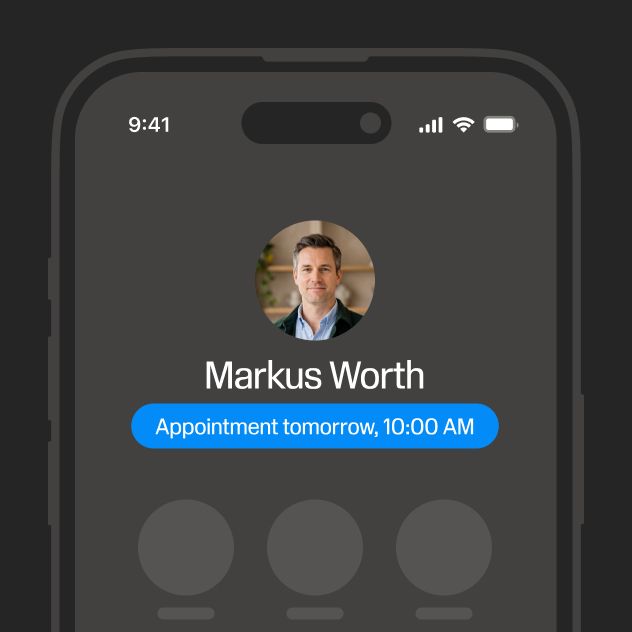
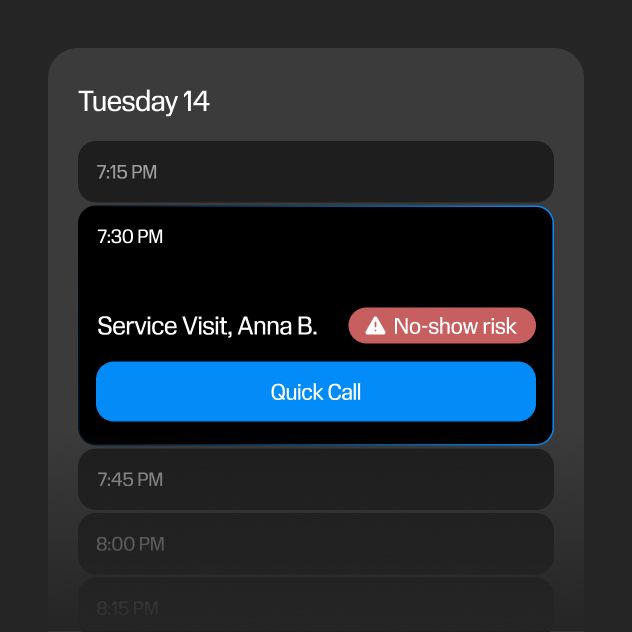
- Appointment confirmations and reminders: Customers get a call 24 to 48 hours before a scheduled appointment, with the option to confirm, reschedule, or ask a question. No-show rates drop, calendars stay clean.
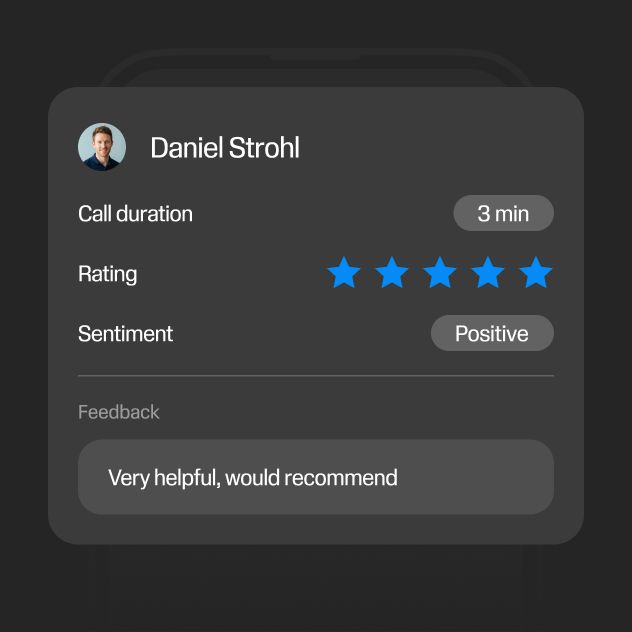
- Post-interaction feedback: A short call after a service appointment, a delivery, or a support resolution captures sentiment while the experience is still vivid. Response rates run dramatically higher than email surveys.
- Renewal and lifecycle outreach: A timely call before a contract renews, a subscription lapses, or a service interval comes due, gives customers a frictionless path to continue rather than letting them drift into churn.
- Service updates and status check-ins: Proactive calls about delivery timing, service windows, or account changes that customers would otherwise need to chase down themselves.
- Win-back and at-risk outreach: When account signals suggest a customer is disengaging, telli reaches out before the relationship goes silent, giving your team a chance to intervene while it still matters.
Each of these workflows can be configured separately in telli, with its own script, qualifying logic, and CRM updates. The customer doesn't experience them as five different campaigns, just as a company that seems to know what's going on with their account.
Why automation makes engagement more personal, not less
The instinct most teams have when they hear "AI customer engagement" is that automation will flatten the customer relationship into something generic. In practice, the opposite tends to happen, and it's worth understanding why.
When engagement is manual, it's also rationed. A rep with 200 accounts can't personally check in on each one every quarter, so most accounts get a templated email or nothing. The rep saves the personalized outreach for the top 10 percent of accounts, and the rest of the customer base gets a one-size-fits-all experience by default. AI voice agents flip that ratio. telli pulls each customer's actual history from your CRM the moment a call connects, references the specific product they bought or the appointment they had, and adapts the conversation in real time. Every customer gets the personalized version, not just the top tier.
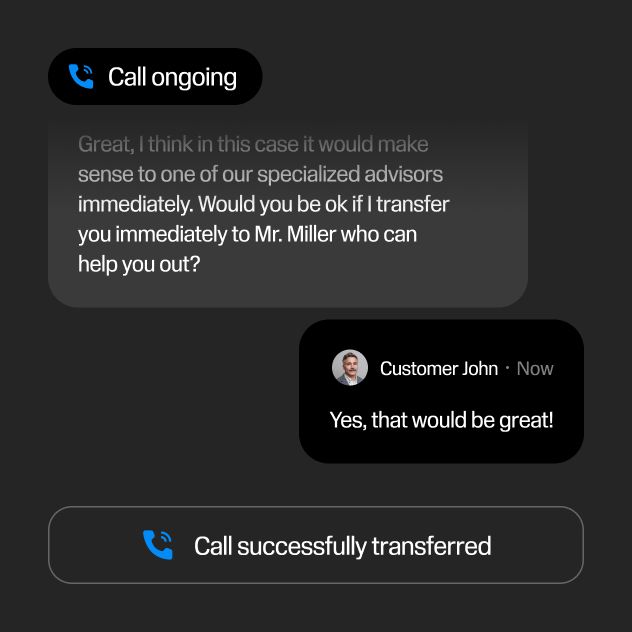
For your team, the upside is obvious: their time gets reallocated to the conversations where human judgment actually matters (escalations, complex questions, high-value relationships) instead of being eaten up by the routine confirmations and check-ins that don't require a person at all. Customers get more attention, your team does less repetitive work, and the engagement metrics quietly improve in the background.
Engagement as a system, not a campaign
The teams that get the most out of AI customer engagement stop thinking about it as a series of campaigns and start treating it as an always-on layer of their customer experience. New customers get welcomed. Active customers get checked in on. Renewal moments get covered. Feedback loops run continuously. Nothing about this is a single project with a start date and an end date, it's a permanent capability that sits underneath the rest of the customer journey and quietly keeps it from leaking value.
With telli running in the background, the proactive customer communication that everyone agrees they should be doing actually happens. Reminders go out on time. Feedback gets collected while it's still useful. At-risk customers get a call before they churn. Your team sees the data flow back into the CRM in real time and spends their hours on the customers and conversations that genuinely need them.
That's what AI-powered customer engagement looks like when it's done right: not a flashy initiative, but a steady, well-instrumented system that keeps customers feeling looked after at every stage of their relationship with your business.

 Lead Reactivation
 Customer Engagement
 Payment Reminders
 Lead Qualification
 Customer Support
 AI Receptionist
 Upselling
 Solar & HVAC
 Healthcare
 Real Estate
 Insurance
 Recruiting
 Energy
 Financial Services
 Consumer
 Press
Press Product
 Customer stories
 Articles
 AI Agents Hub
 Partnerships
 Playbook