Lead Reactivation
 Customer Engagement
 Payment Reminders
 Lead Qualification
 Customer Support
 AI Receptionist
 Upselling
 Solar & HVAC
 Healthcare
 Real Estate
 Insurance
 Recruiting
 Energy
 Financial Services
 Consumer
 Press
Press Product
 Customer stories
 Articles
 AI Agents Hub
 Partnerships
 Playbook
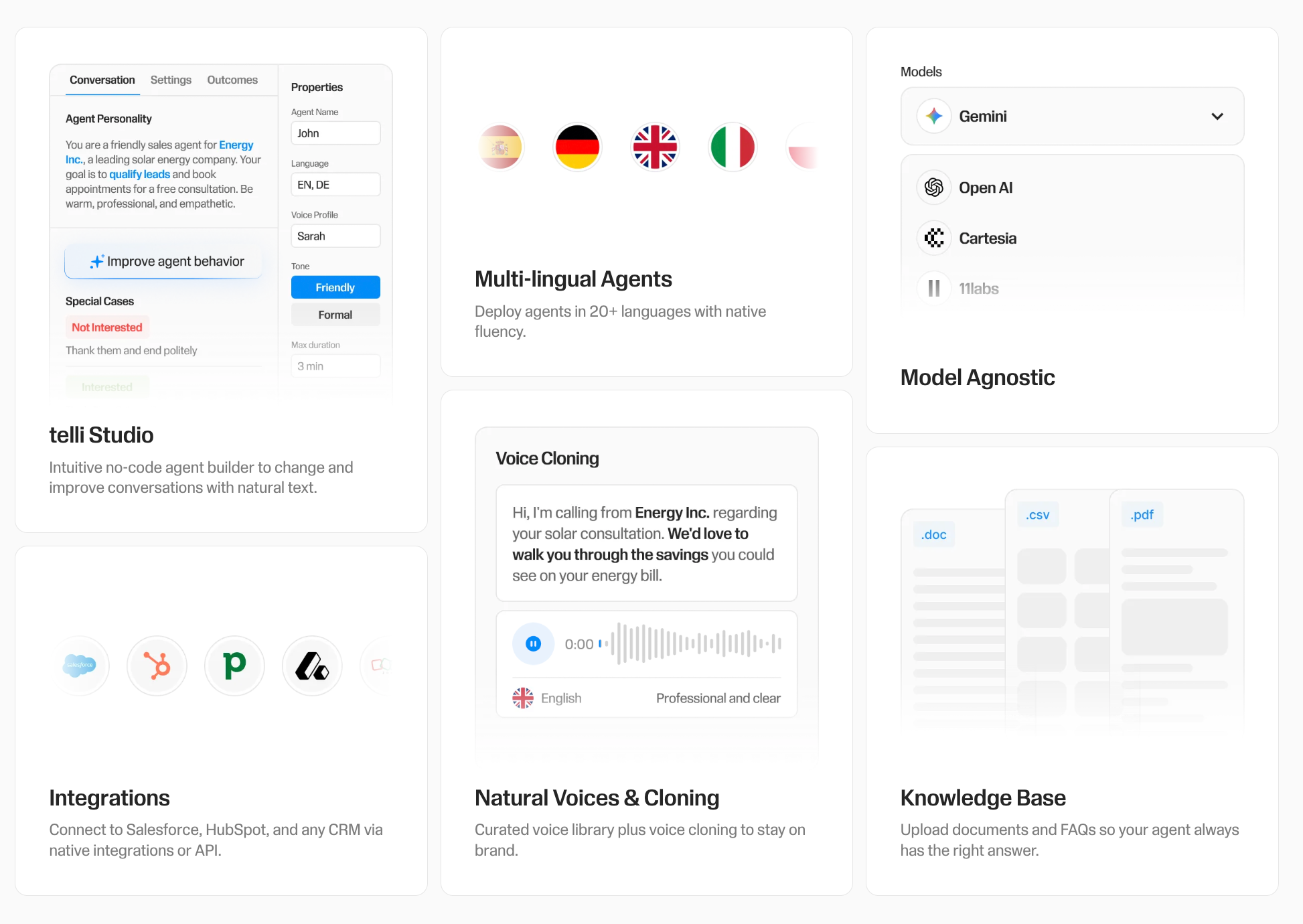
telli
telli builds AI-powered voice agents that automate millions of customer calls for leading sales-driven organizations.

Finding the right AI voice platform starts with understanding what each provider offers. Some platforms focus on enterprise customer service, while others prioritize developer flexibility, no-code automation, or outbound calling. This directory compares leading AI voice platforms so you can evaluate their features, use cases, integrations, and strengths before choosing a solution.
telli
telli builds AI-powered voice agents that automate millions of customer calls for leading sales-driven organizations.
Fonio
Fonio.ai is an AI voice platform designed to automate phone calls for businesses using natural, human-sounding voice agents.
Bland AI
Bland AI is a specialized, enterprise-grade AI platform for automating and scaling phone calls using hyper-realistic, human-like agents.
ElevenLabs
ElevenLabs is a leading AI audio research company offering advanced text-to-speech, voice cloning, and dubbing software.
Parloa
Parloa is an AI-powered conversational platform designed to automate and enhance customer service, especially for contact centers.
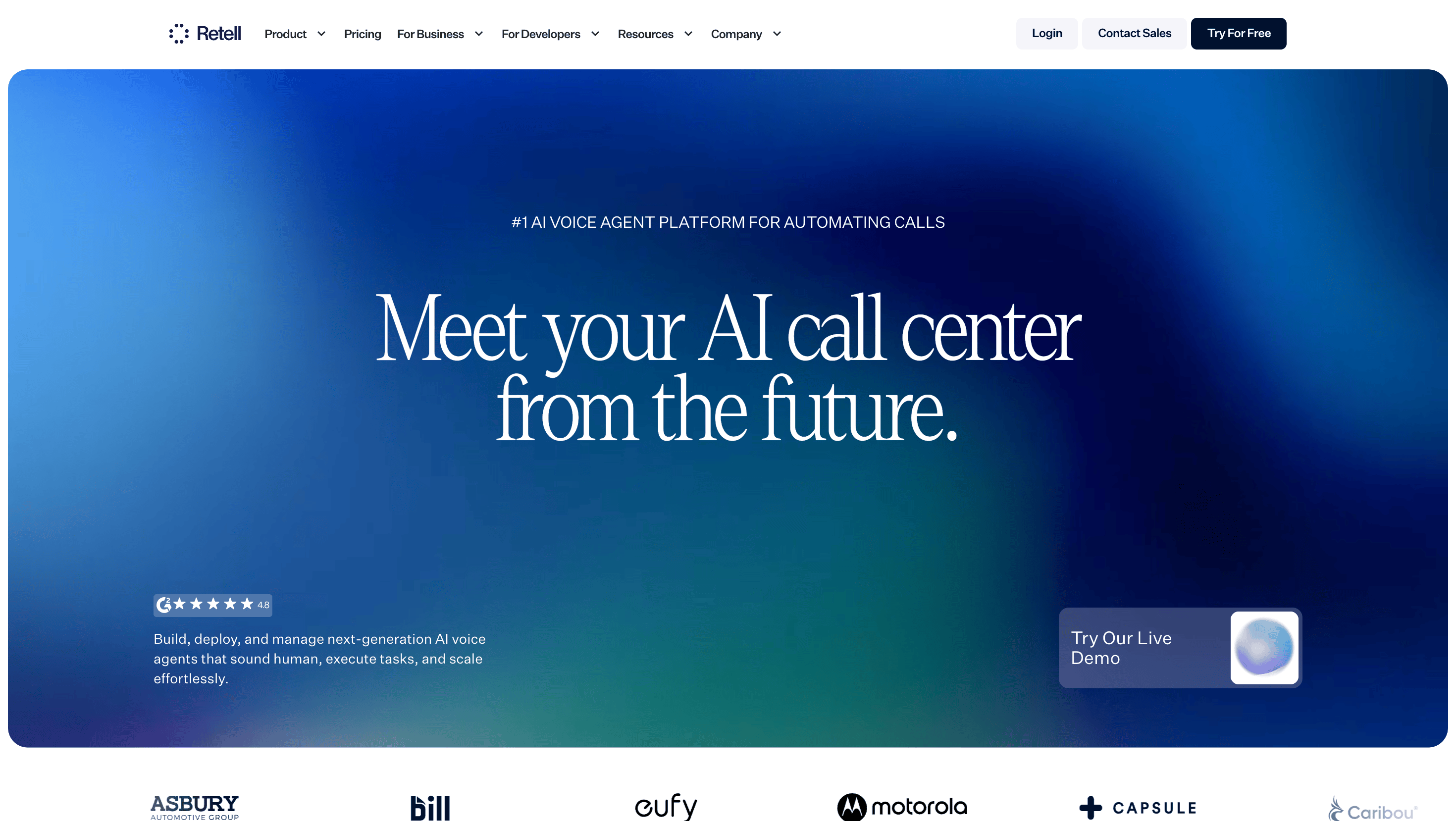
Retell AI
Retell.ai is a conversational voice AI platform that helps businesses build and deploy AI agents for real-time phone calls.
Synthflow
Synthflow is a no-code platform that enables teams to build and deploy AI voice agents quickly. It supports inbound and outbound use cases like scheduling, support, and lead qualification, with a visual builder and modular workflows.
Vapi
Vapi.ai is a developer-focused voice AI platform for building real-time, programmable voice agents.
Voice Agents & Conversations
Calling & Telephony
Workflow Automation
Intelligence, Analytics & Data
Platform, Reliability & Compliance
Disclaimer:
The Information are gathered from publicly available sources (including company websites, pricing pages, and public documentation) as of January 2026. While we strive to keep this information accurate and up-to-date, software features and pricing change frequently. This comparison is intended for informational purposes only and does not constitute legal or professional advice. All trademarks and registered trademarks are the property of their respective owners and are used for identification purposes only. Spot an error? Please let us know at support@telli.com
AI voice agents have moved from experimental tools to mission-critical infrastructure for sales, support, and operations. In 2026, businesses are no longer asking if they should adopt voice AI, but which platform best fits their needs. From fully managed, no-code solutions to developer-first APIs and enterprise-grade contact center platforms, the landscape is rich and increasingly competitive.
We reviewed 8 AI voice agent platforms in 2026, testing each for setup speed, no-code accessibility, pricing transparency, EU compliance and B2C outbound performance. The right platform depends on your team size, technical resources and primary use case. Here's how they rank.
telli helps businesses automate inbound and outbound phone conversations using AI voice agents. The platform combines voice automation with workflow management, CRM integrations, analytics, and business-ready deployment tools. Common use cases include customer support, appointment scheduling, lead qualification, collections, and sales calls.
Unlike developer-only platforms, telli supports both no-code configuration and API-based customization. This allows businesses to launch voice agents quickly while giving technical teams the flexibility to build more advanced workflows as requirements grow.
Read the full review here.
Retell AI is an API-first platform for building real-time conversational voice applications. It gives developers control over prompts, workflows, telephony integrations, and conversation logic, making it well suited for custom AI voice deployments.
Businesses with engineering resources often use Retell AI to build customer support assistants, scheduling systems, sales agents, and internal voice applications that require low latency and flexible integrations.
Read the full review here.
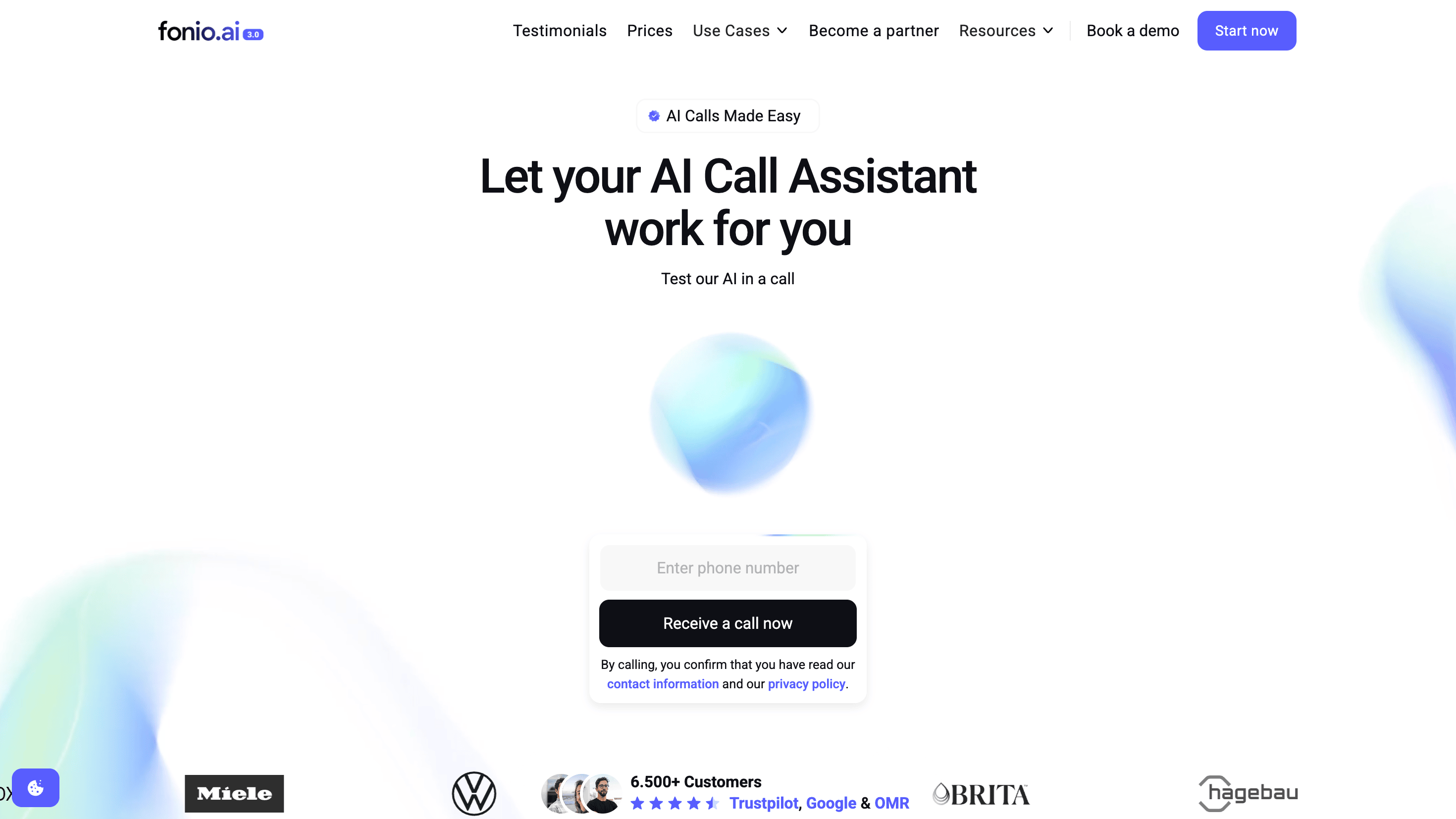
Fonio focuses on AI-powered business phone systems that automate routine customer conversations. Businesses can use the platform to answer calls, collect information, route callers, and manage common requests without increasing support workloads.
Its business-first approach makes it suitable for organizations looking to modernize phone operations while maintaining familiar customer experiences.
Read the full review here.
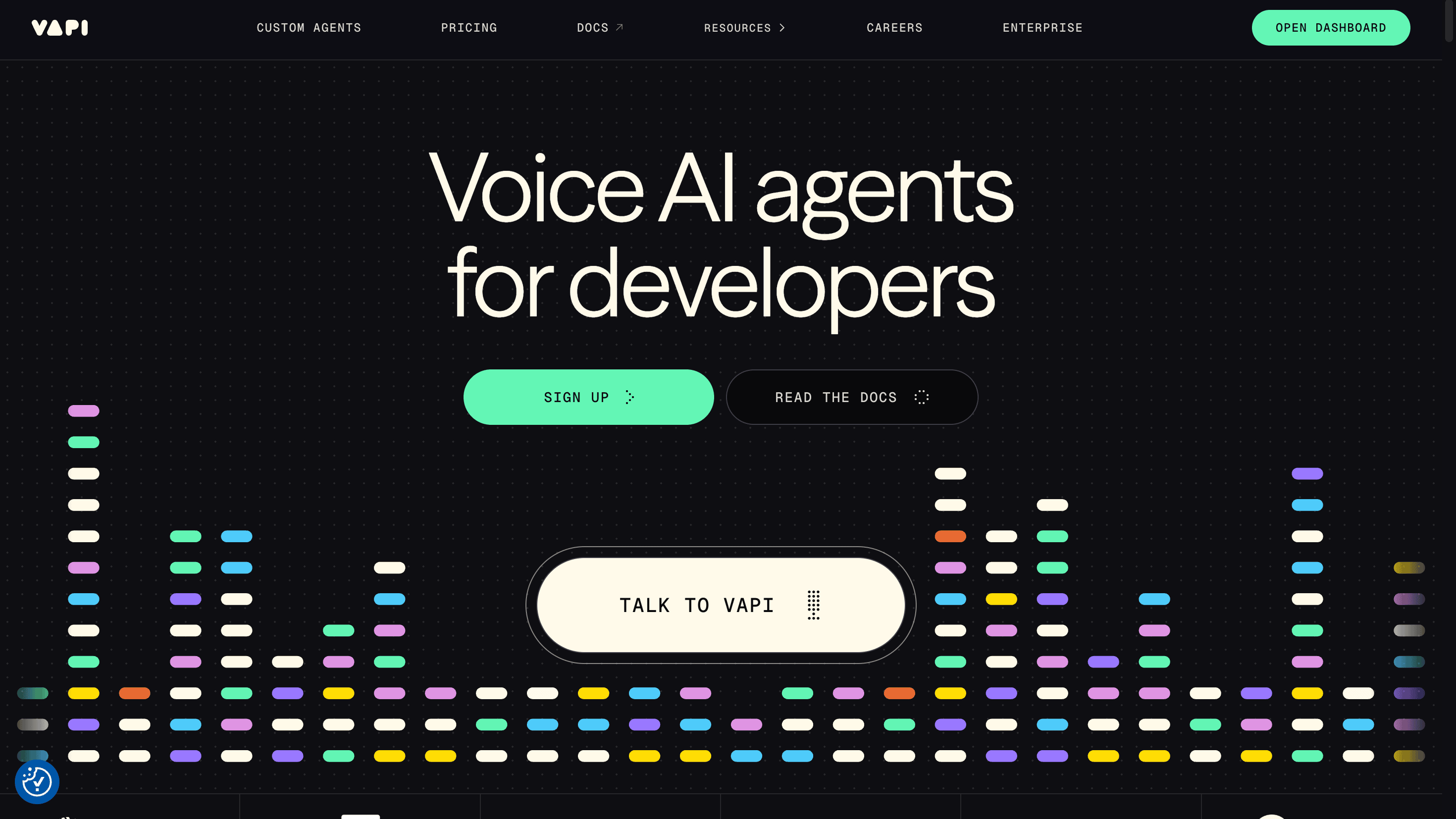
Vapi provides developers with infrastructure for building AI voice applications using APIs and large language models. The platform supports custom conversation flows, telephony providers, and workflow integrations, making it suitable for businesses developing tailored voice experiences.
Its flexibility makes Vapi a common choice for engineering teams that need full control over deployment and customization.
Read the full review here.
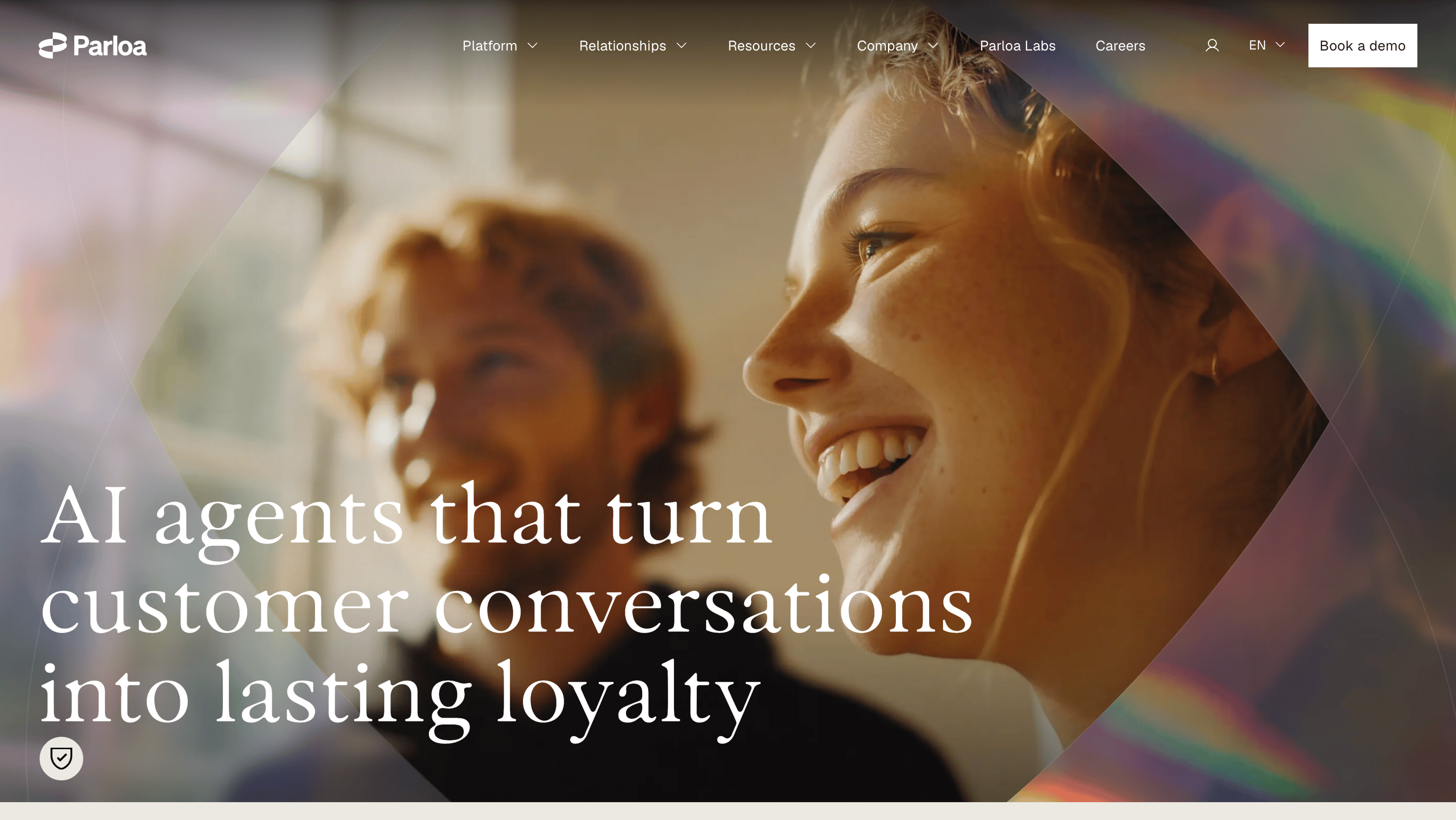
Parloa is an enterprise AI voice platform built for organizations managing large volumes of customer conversations. It combines conversational AI with contact center capabilities, allowing businesses to automate support while maintaining consistent service across voice channels.
The platform supports enterprise deployment, multilingual conversations, and integrations with existing customer service systems. Companies with complex support operations often evaluate Parloa when replacing or expanding traditional contact center workflows.
Read the full review here.
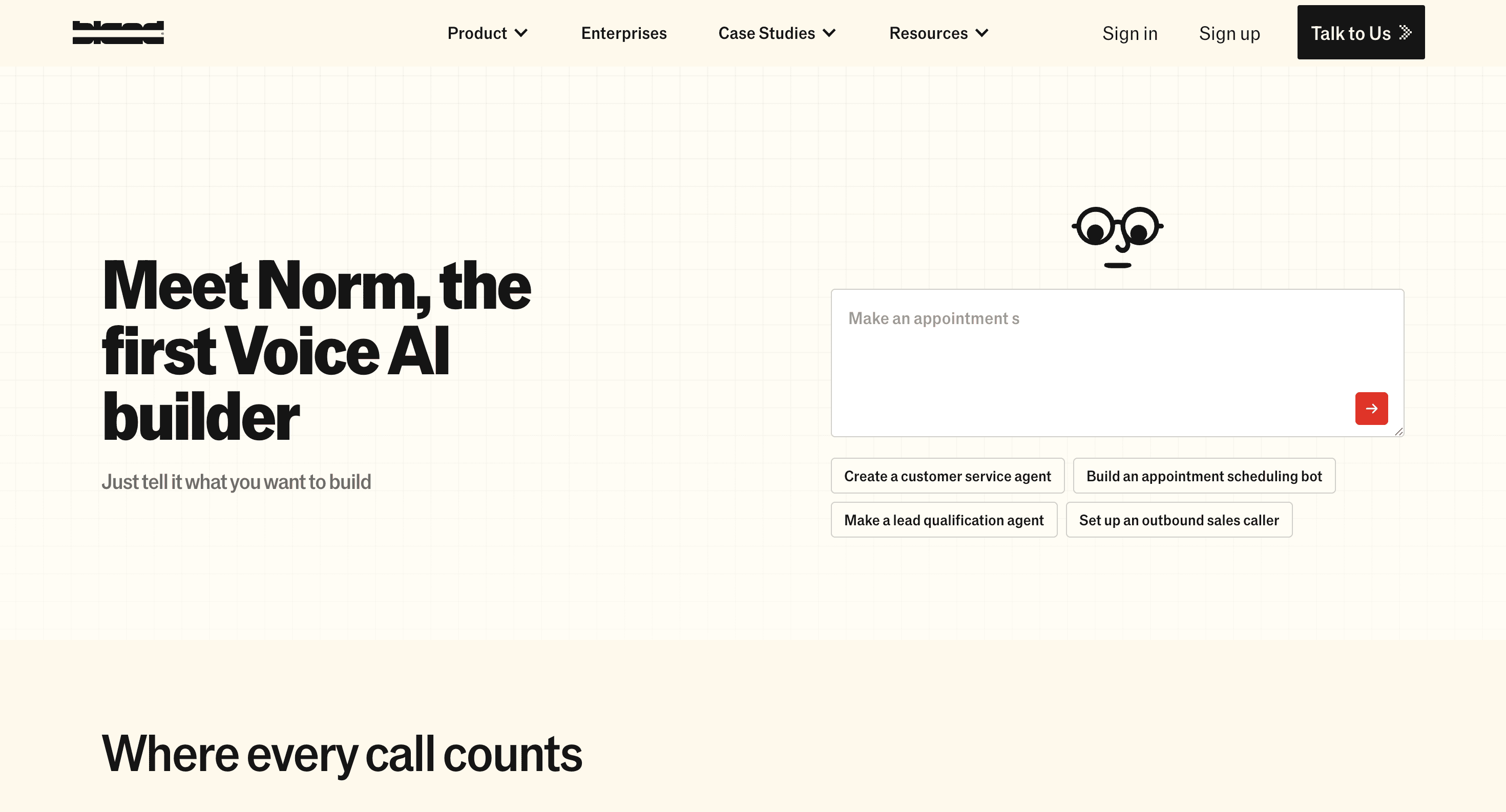
Bland AI is an API-first platform designed for businesses building high-volume AI phone systems. Developers can create voice agents for sales, customer support, appointment reminders, and other automated phone workflows while integrating with external applications and business systems.
Its flexible infrastructure makes it suitable for organizations that want complete control over conversation logic and deployment rather than relying on pre-built templates.
Read the full review here.
ElevenLabs is widely recognized for AI voice generation and realistic speech synthesis. Businesses often use its voice technology alongside conversational AI platforms to improve the quality and naturalness of automated phone conversations.
Although its primary focus is voice generation rather than complete call automation, it plays an important role in creating natural customer interactions across support, sales, education, and media applications.
Read the full review here.
Synthflow AI enables businesses to build AI voice agents using a no-code interface, reducing the time required to launch automated phone workflows. Teams can configure customer support, appointment scheduling, lead qualification, and outbound calling without extensive development work.
Its visual workflow builder makes it a practical option for organizations that want faster deployment while still supporting integrations with business applications.
Read the full review here.
Businesses use AI voice platforms across many customer-facing and operational workflows. While capabilities vary by provider, the following are among the most common applications.
AI voice agents can answer common questions, authenticate callers, resolve routine requests, and transfer conversations when human assistance is required.
Businesses automate appointment booking, confirmations, cancellations, and reminders without requiring staff to answer every call.
Sales teams use AI voice agents to engage new leads, collect information, qualify prospects, and schedule follow-up conversations.
Voice agents can handle outreach campaigns, payment reminders, customer surveys, renewals, and follow-up calls at scale.
AI voice platforms help direct callers to the correct department or workflow based on their responses, reducing wait times and improving customer experience.
Every AI voice platform approaches automation differently. Comparing the following capabilities can help narrow your options before making a decision.
Natural-sounding voices improve customer interactions and reduce friction during conversations.
Fast response times create smoother conversations and reduce interruptions.
Businesses serving multiple regions should compare supported languages, accents, and localization options.
Connecting voice agents with CRM platforms allows businesses to access customer information and update records automatically.
Review supported phone providers, SIP compatibility, call routing options, and deployment flexibility.
Developer-focused platforms provide APIs for building custom workflows, while no-code platforms prioritize speed and ease of deployment.
Conversation analytics, call recordings, and reporting help teams measure performance and identify opportunities for improvement.
Enterprise deployments may require encryption, access controls, compliance certifications, and audit logging.
The platforms in this directory were selected based on publicly available product information, market adoption, supported use cases, deployment options, integrations, and technical capabilities. The goal is to help businesses compare providers using consistent evaluation criteria rather than promotional claims.
The AI voice agent landscape in 2026 offers a spectrum of solutions tailored to different business needs. Platforms like telli prioritize ease of deployment, multilingual support, and end-to-end automation for outbound and inbound calls. Developer-focused platforms like Vapi and ElevenLabs give teams full control over call logic and integrations. Enterprise-grade options such as Bland AI, Parloa, and Regal AI combine natural conversation quality with advanced analytics for high-volume, regulated industries. Choosing the right platform depends on your business priorities: speed-to-value, customization, voice realism, or full omnichannel orchestration.
Get a personalized demo and hear telli in action and how it can simplify your call operations
By clicking 'Request Demo', you agree to be contacted for marketing purposes. Review our Privacy Policy
FAQ
The best AI voice agents combine natural, human-like speech, multilingual support, real-time integrations with CRMs, advanced workflow automation, and analytics. They deliver high-quality outbound and inbound interactions, improve conversion rates, and reduce manual call workload while maintaining compliance for regulated industries.
Top-tier AI voice agents go beyond basic scripts, offering dynamic conversation handling, real-time decision-making, CRM integration, warm call transfers, and analytics. They support multilingual interactions and complex workflows, providing human-like engagement that boosts conversions and customer satisfaction, unlike standard assistants that rely on rigid, limited responses.
Key features include natural conversational AI, call analytics, CRM integration, appointment booking, warm transfers, multilingual support, auto-dialers, workflow customization, verified phone numbers, and knowledge base access. Advanced platforms also provide live actions and post-call workflow automation, covering the full call lifecycle from engagement to reporting.